
Hyundai Tucson 2026 Pakistan: The Honest Buyer's Guide to the SUV That Went Hybrid
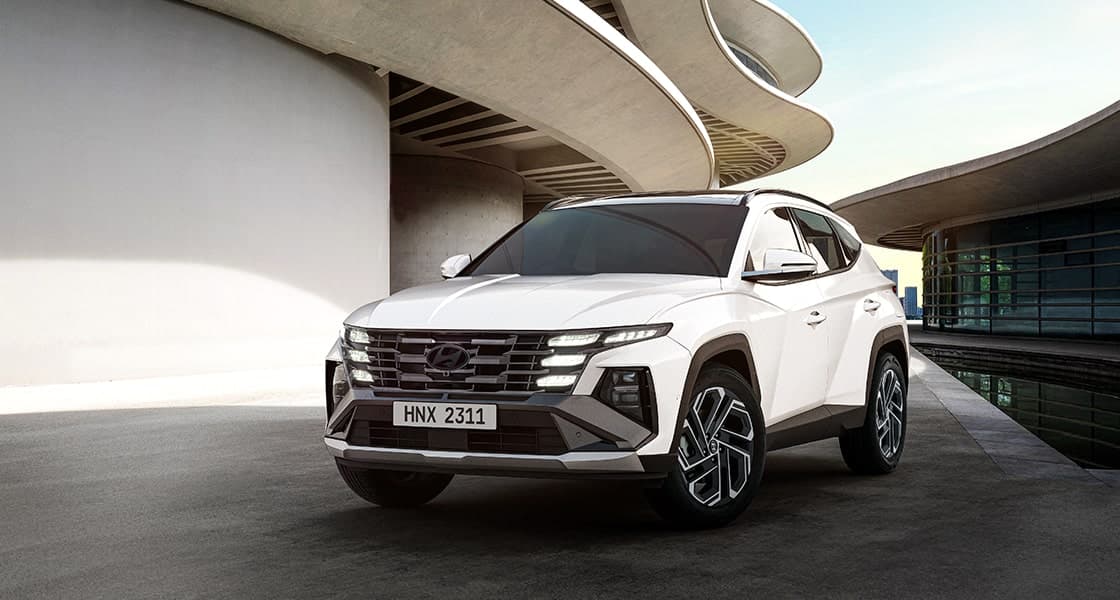
Prices verified as of July 18, 2026. This guide is refreshed quarterly (January, April, July, October) to keep numbers current. Note: the market is actively repricing following the Finance Act 2026 duty changes effective July 1 — confirm final dealer pricing before booking.
The Hyundai Tucson has spent five years doing something few expected when Hyundai Nishat launched it in 2020: making Korean SUVs a normal, mainstream choice for Pakistani families who would previously have defaulted to Toyota or Honda without a second thought. The Tucson didn't just sell — it changed what buyers in the PKR 1 crore bracket expect a car to look and feel like inside. Panoramic screens, ADAS safety suites, and genuinely modern cabin design stopped being exotic because the Tucson made them ordinary.
For 2026, the Tucson story has changed in a fundamental way: the lineup has gone hybrid. Hyundai Nishat's current offering is built around two hybrid variants — the Tucson Hybrid Smart FWD and the Tucson Hybrid Signature AWD — pairing a 1.6L turbocharged petrol engine with an electric motor. This repositions the Tucson from "the well-equipped Korean alternative" to a direct shot at the hybrid SUV segment that Toyota's Corolla Cross HEV and Haval's H6 HEV have been building.
And the timing, whether by luck or planning, is impeccable. The Finance Act 2026, effective July 1, imposes a new environmental levy on vehicles above 2,000cc — 10% for 2,001–3,000cc and 19.5% above that. The Tucson Hybrid's 1.6L engine sails under that threshold entirely. While imported SUVs above 2,000cc just became several lakh rupees more expensive overnight, the locally assembled, sub-2,000cc Tucson Hybrid sits in exactly the sweet spot the new tax structure rewards.
So the question this guide answers: at PKR 1.12–1.22 crore, does the Tucson Hybrid actually deserve your money — and which of the two variants makes sense?
The 2026 Lineup at a Glance
For 2026, Hyundai Nishat's Tucson lineup centres on two locally assembled hybrid variants:
Variant | Powertrain | Drivetrain | Ex-Factory Price |
|---|---|---|---|
Tucson Hybrid Smart | 1.6L T-GDi hybrid | FWD | PKR 11,220,000 |
Tucson Hybrid Signature | 1.6L T-GDi hybrid | AWD | PKR 12,240,000 |
Both variants use the same hybrid powertrain: a 1.6L turbocharged petrol engine paired with an electric motor and a 6-speed automatic transmission. The difference between them is drivetrain (front-wheel drive vs all-wheel drive) and equipment level.
One verification note for buyers: the earlier petrol variants (the 2.0L GLS Sport FWD and Ultimate AWD that defined the Tucson's first five years in Pakistan) may still be available as remaining stock at some dealerships. If you're quoted a petrol Tucson at a meaningful discount, it's worth considering — but be aware you'd be buying the outgoing configuration, with resale implications discussed below.
On-road costs: expect roughly 10–15% above ex-factory once registration, withholding tax, freight, and insurance are added — with the filer/non-filer gap continuing to be the single largest variable. At this price bracket, the withholding tax difference between filer and non-filer status runs well into six figures. If you are not a tax filer and you're shopping at PKR 1.2 crore, fix that first.
Variant-by-Variant: What You Actually Get
Tucson Hybrid Smart FWD (PKR 1,12,20,000). The entry point to Tucson hybrid ownership, and honestly, the variant most buyers should choose. You get the full hybrid powertrain, the modern fourth-generation facelift styling, LED lighting, the large touchscreen infotainment with wireless Apple CarPlay and Android Auto, six airbags, ABS, electronic stability control, ADAS features including lane keep assist and adaptive cruise control, rear parking sensors, and a tyre pressure monitoring system. What you give up versus the Signature: all-wheel drive, and a tier of comfort features (powered tailgate, premium seat trim, memory seats, panoramic sunroof depending on final spec). For the overwhelming majority of Pakistani driving — city commutes, motorway runs, the occasional trip north on paved roads — front-wheel drive is entirely sufficient, and the PKR 10.2 lakh saving is real money.
Tucson Hybrid Signature AWD (PKR 1,22,40,000). The full experience. All-wheel drive via Hyundai's HTRAC system, the complete comfort suite — electric seats with memory, fingerprint sensor, heated steering, powered tailgate, premium interior trim — and the flagship positioning. The honest question is whether AWD is worth PKR 10.2 lakh in Pakistan. If your driving genuinely includes Murree winters, northern-area trips, or unpaved approaches, yes. If your AWD use case is "it might be nice someday," you're paying a substantial premium plus a small ongoing fuel-economy penalty for hardware you'll rarely engage. The Signature's real appeal is the comfort equipment, not the drivetrain — and owner reviews consistently praise exactly those touches.
The honest take: the Smart FWD is the rational choice, and the Signature AWD is the emotional one. Neither is wrong, but know which purchase you're making.
The Hybrid Math at Today's Fuel Prices
Fuel prices have swung dramatically this year — from PKR 266 before the Gulf conflict began, to a peak of PKR 458.41 in early April, back down to PKR 316.15 as of this writing. With the government now revising prices daily, treat any single day's rate as a snapshot, not a plateau. That volatility is itself the argument for running the hybrid math conservatively.
The Tucson Hybrid delivers a real-world 14–16 km/l in mixed driving (claimed figures run higher; treat 15 km/l as a fair planning number). A comparable conventional petrol SUV — the outgoing 2.0L Tucson, a Sportage, an MG HS — delivers 9–11 km/l in the same conditions.
For a 15,000 km/year driver at PKR 316.15 per litre:
Hybrid Tucson at 15 km/l: 1,000 litres/year ≈ PKR 3.16 lakh annually
Conventional petrol SUV at 10 km/l: 1,500 litres/year ≈ PKR 4.74 lakh annually
That's a saving of roughly PKR 1.6 lakh per year at today's prices — and it was PKR 2.1 lakh per year at the May peak. Over a five-year ownership window, the hybrid saves somewhere between PKR 7.5 lakh and PKR 10 lakh in fuel depending on where prices average out, before counting the hybrid's stronger resale positioning. Since the Tucson lineup no longer asks you to pay a hybrid premium over an equivalent petrol variant — the hybrid is the lineup — this math now works in your favour by default rather than being a payback calculation you need to win.
What the Tucson Hybrid Gets Right
The most complete cabin experience in its price band. This has been the Tucson's calling card since 2020 and the hybrid deepens it. The interior is genuinely a class above the Toyota Corolla Cross at similar money — larger screens, more sophisticated materials, better-feeling switchgear, and comfort touches (memory seats, fingerprint sensor, heated steering on the Signature) that Toyota simply doesn't offer at this price in Pakistan.
A proper ADAS safety suite. Six airbags, electronic stability control, lane keep assist, adaptive cruise control, and blind-spot monitoring put the Tucson Hybrid among the best-equipped vehicles on safety in the locally assembled market. For families, this is not a trim-sheet detail — it's the substantive difference between 2026 safety engineering and the two-airbag reality still common in cheaper segments.
The new tax structure works in its favour. The Finance Act 2026's environmental levy on 2,000cc-plus vehicles raises costs on the imported SUVs — Prados, large CBU crossovers — that aspirational buyers cross-shop. The 1.6L Tucson Hybrid escapes the levy entirely while its imported competition got more expensive on July 1. Relative positioning matters, and the Tucson's just improved without Hyundai lifting a finger.
Strong hybrid performance. The 1.6 T-GDi hybrid system produces meaningfully more combined output than the Corolla Cross HEV's modest 122 hp, with the turbocharged engine giving it genuinely confident motorway pace. Among locally assembled hybrid SUVs, the Tucson is the one that doesn't ask you to trade performance for economy.
Where the Tucson Falls Short
The dealer network is still the weak link. Hyundai Nishat's 3S footprint has grown, but it remains meaningfully thinner than Toyota's or Suzuki's, particularly outside Karachi, Lahore, Islamabad, and the major Punjab cities. If you live in a smaller city, honestly map your nearest Hyundai service point before committing. Hybrid systems specifically require dealer-trained technicians; an independent mechanic in a district town will not be servicing this powertrain for years.
Resale is good, not Toyota-good. The Tucson has built respectable resale over five years, and owner sentiment on this point has improved ("no tension of resale" as one long-term owner put it). But the Corolla Cross still holds value more predictably, simply because the Toyota badge carries decades of used-market trust the Koreans are still earning. If you churn cars every 2–3 years, that difference compounds; if you keep cars 5+ years, it matters less.
Hybrid battery longevity in Pakistan is still an open dataset. Hyundai's hybrid system is proven globally, but local long-term data — battery performance after 8–10 years of Pakistani heat, replacement cost and availability — is thinner than for Toyota's hybrid system, which has a decade of local Prius/Aqua import history behind it. This is an early-adopter consideration, not a red flag.
Price positioning is now genuinely premium. At PKR 1.12–1.22 crore, the Tucson costs roughly 25–35% more than a Corolla Cross HEV. It justifies much of that gap on equipment and performance — but the gap is real, and for buyers whose priority is simply "hybrid SUV with a trusted badge," the cheaper Toyota remains the rational default.
New vs Used: The Calculation
The used Tucson market is now deep enough to be genuinely interesting. Five years of local assembly means clean 2021–2023 petrol Tucsons (2.0L GLS Sport and Ultimate) circulate in meaningful volume, typically in the PKR 65–85 lakh band depending on year, variant, and condition.
Here's the honest framing: a clean 2022–2023 Ultimate AWD at around PKR 80 lakh gets you most of the Tucson cabin experience for roughly 35% less than a new Hybrid Signature. What you give up is the hybrid powertrain (and its ~PKR 1.5 lakh/year fuel saving), the facelift styling, the newest ADAS iteration, and warranty coverage. What you gain, beyond the price difference, is a known quantity — the 2.0L MPI petrol engine is simple, proven, and serviceable outside the dealer network in a way the hybrid is not.
For buyers stretching to reach the new hybrid: don't. A used petrol Tucson plus PKR 30 lakh in your pocket is the better position. For buyers comfortably in the budget who plan to keep the car 5+ years: the new hybrid's fuel savings, warranty, and stronger future resale (hybrids are where used-market demand is heading) justify buying new.
One caution on the used side: early used hybrid Tucsons will start appearing in 12–18 months. Battery health verification on used hybrids is non-negotiable — insist on a dealer diagnostic report before buying any used hybrid, this model or any other.
Competitor Reality Check
Toyota Corolla Cross HEV (~PKR 84–90 lakh ex-factory, pre-July pricing). The value benchmark. Cheaper by PKR 25–35 lakh, backed by Pakistan's deepest service network, with Toyota's decade-proven hybrid system. The Tucson beats it clearly on cabin, equipment, power, and space. The Cross beats it on price, network, and resale certainty. This is the segment's defining choice: substance-per-rupee (Toyota) versus experience-per-rupee (Hyundai). Note that post-Finance Act pricing across the market is in flux — verify current Cross pricing before comparing.
Kia Sportage (mechanically related, similar band). The Tucson's corporate sibling from Lucky Motors, sharing platform DNA with sportier styling. The current-generation comparison depends heavily on whether Kia's local lineup has followed Hyundai into hybrid territory — we'll cover the Sportage in full in the next guide in this series. Historically, the Sportage has undercut the Tucson slightly on price while trailing slightly on cabin polish.
Haval H6 HEV (~PKR 1.1–1.2 crore band). The Chinese hybrid alternative, and a genuinely serious one — the H6 has climbed into the top four of Pakistan's sales charts. Strong equipment, competitive hybrid economy, aggressive pricing. The trade-offs remain brand maturity and long-term resale confidence, though Sazgar's execution has been steadily narrowing that gap. For buyers open to Chinese brands, the H6 HEV is the Tucson's toughest single competitor.
MG HS (~PKR 70–85 lakh band). Cheaper by a wide margin with a long feature list. But the brand's resale performance and service consistency have not matched its launch promises, and at this point the HS competes on price alone. If total cost of ownership matters to you, the gap narrows considerably after resale.
Imported CBU SUVs above 2,000cc. Whatever you were considering here just got more expensive. The Finance Act's environmental levy (10% at 2,001–3,000cc, 19.5% above) plus revised excise duties have pushed imported large-engine SUV costs up by figures running from several lakh to over a crore at the top end. The locally assembled, sub-2,000cc hybrid segment — where the Tucson sits — is the deliberate beneficiary of this policy design.
The Verdict
Best overall choice: Tucson Hybrid Smart FWD. The full hybrid powertrain and safety suite at the accessible end of the range. FWD is sufficient for most Pakistani use cases.
Best if the budget is genuinely comfortable: Tucson Hybrid Signature AWD. Buy it for the comfort equipment; treat the AWD as a bonus.
Best value in the badge: A clean 2022–2023 used petrol Ultimate at ~PKR 80 lakh, if you can live without the hybrid economics.
Don't buy the Tucson if: Your nearest Hyundai 3S dealership is more than an hour away, or your real priority is maximum hybrid value per rupee — in which case the Corolla Cross HEV remains the rational answer at PKR 25+ lakh less.
Should You Wait?
The fifth-generation Tucson exists globally, but Hyundai Nishat only recently invested in localising the current hybrid — a generational change in Pakistan is realistically 3+ years away. Meanwhile, the post-Finance Act market is actively repricing: Toyota has already cut prices on some models, and competitive responses across the SUV segment are likely over the coming weeks. If you're not in a hurry, watching pricing settle through July and August costs you nothing and might save you real money. If you need the car now, nothing structural argues for waiting.
Final Thoughts
The Tucson Hybrid is what happens when the Korean challenger stops challenging and starts leading. It is, on the merits, the most complete vehicle in Pakistan's locally assembled SUV market: the best cabin, the strongest safety equipment, genuinely good hybrid economics, and — courtesy of the Finance Act — a tax position its imported competition now envies.
What it is not is the value choice. That title stays with Toyota. The Tucson Hybrid asks you to pay a genuine premium for a genuinely better daily experience, backed by a dealer network that is good in big cities and thin everywhere else. Whether that trade makes sense is a question about where you live and what you value — not about whether the car is good. It is.
Looking for a Hyundai Tucson in Pakistan? Browse verified new and used Tucson listings on CarDeal.pk and filter by variant, year, city, and price. Track live fuel prices at cardeal.pk/fuel-prices. We do the haggling math for you.
CarDeal
Bringing you the latest automotive news and insights from Pakistan