The Chinese Wave: How BYD, MG, Haval, Changan & Deepal Are Reshaping Pakistan's Auto Market in 2026
TL;DR
In January 2026, Sazgar Haval became the second-largest car assembler in Pakistan, overtaking Honda and Toyota's individual model rankings. The Haval H6 alone crossed 2,000 monthly units — territory once reserved for the Suzuki Alto and Toyota Corolla.
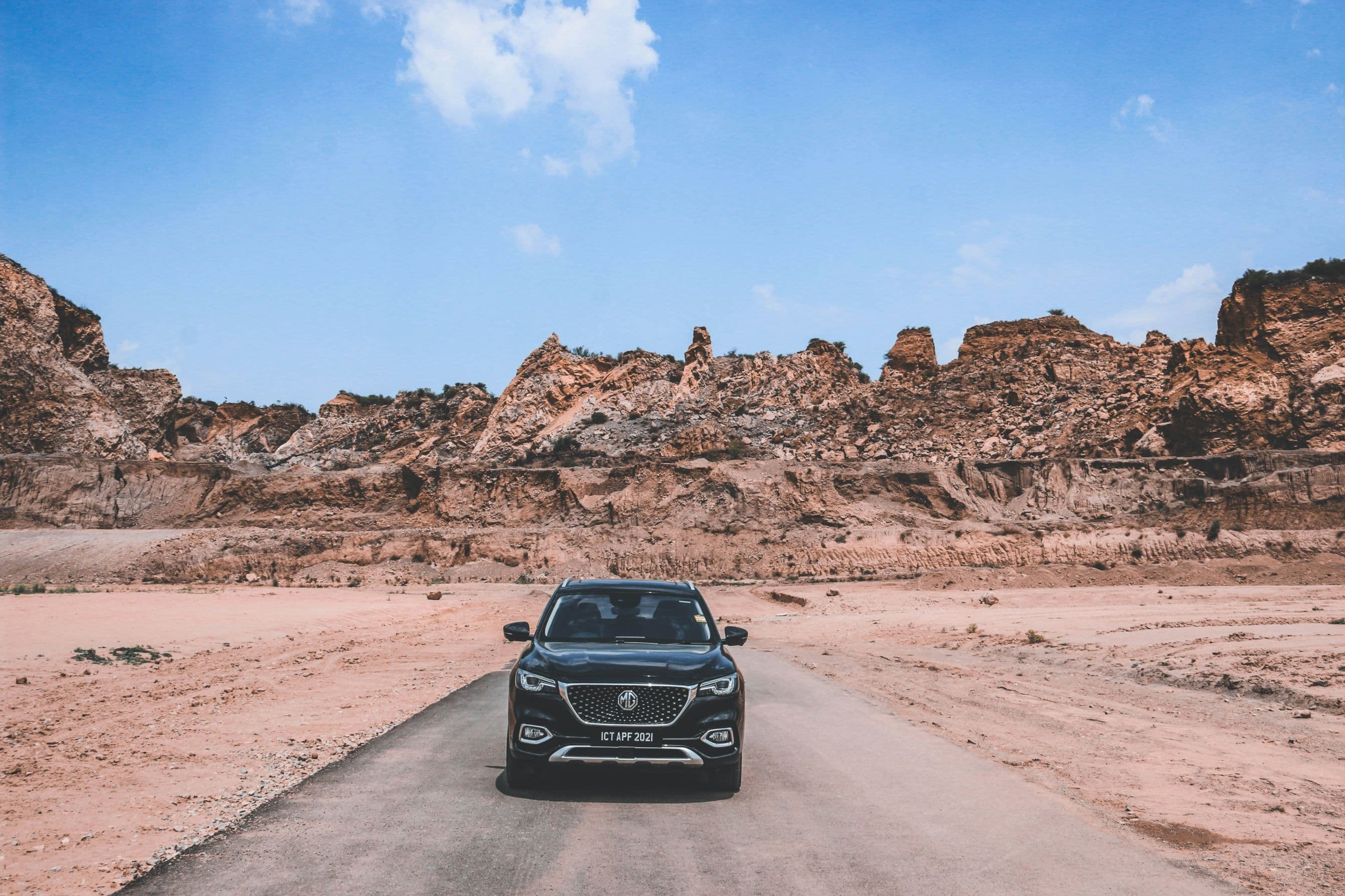
It isn't a fluke. Five Chinese brands — Haval, BYD, MG, Changan and Deepal — have quietly assembled the most aggressive lineup in Pakistan's auto history. BYD starts Pakistan assembly in July–August 2026 near Karachi. MG already sells a plug-in hybrid SUV. Haval offers a PHEV claiming 1,000+ km range. Changan just slashed Oshan X7 prices by up to PKR 7 lakh.
For the first time in three decades, the Suzuki–Toyota–Honda grip on Pakistan's roads is under real, sustained attack. This guide explains who these brands are, what they sell, what's coming, and what it means for anyone buying a car in Pakistan in 2026 or 2027.
For most of the last 30 years, buying a car in Pakistan meant choosing between three brands. Suzuki at the bottom, Toyota at the top, Honda sitting between them. Everything else was a rounding error.
That world is ending — faster than most people realise.
Pakistan's passenger car market grew roughly 37% in the first two months of 2026. Cumulative sales over the first eight months of the current fiscal year hit 128,498 units, a 43% jump year-on-year. The rebound is real. But the more interesting story is who is riding the wave.
In January 2026, the Sazgar-assembled Haval H6 was the second best-selling car in the country, full stop. Not the second best Chinese car. The second best car, period. Behind only the Suzuki Alto and ahead of the Toyota Corolla, Honda Civic, and every other legacy model. Sazgar Engineering's February sales jumped 90% year-on-year.
Meanwhile, BYD — the world's largest electric vehicle manufacturer — is weeks away from starting Pakistan assembly at a new plant near Karachi. MG is expanding its plug-in hybrid lineup. Changan cut prices across its range in February. Deepal, Changan's premium EV brand, has started deliveries of the S07 and L07.
Here's what every Pakistani buyer needs to know about the five Chinese brands now reshaping the market.
How Pakistan's door opened to Chinese automakers
The entry point was the Auto Development Policy 2016–21. To break the three-brand oligopoly, the government offered tax incentives for new assemblers. The response was a flood: Kia, Hyundai, MG, Changan, Haval, DFSK, Foton, Proton and others signed up over the following years.
Most of these partnerships moved slowly. Local assembly is hard. CBU (completely built-up) imports remained expensive. Economic shocks in 2022 and 2023 — the rupee collapse, 22% policy rate, import restrictions — almost broke the industry. Sales halved in FY23.
But three things changed between late 2024 and early 2026:
Interest rates fell sharply. Auto financing became affordable again.
Electricity tariffs for EV chargers were cut 45% in January 2025, along with broader EV policy incentives.
Chinese OEMs quietly built out their local assembly capacity during the downturn. When demand returned, they were ready — and the Japanese incumbents weren't expecting it.
The result: Chinese brands now occupy the fastest-growing segments (SUVs, crossovers, PHEVs, EVs) at the exact moment Pakistani buyers shifted toward them.
The five Chinese brands reshaping the market
1. Haval (Great Wall Motors) — the breakout star
Local partner: Sazgar Engineering Works Ltd.
Models on sale: Jolion, Jolion HEV, H6 1.5T, H6 2.0T, H6 HEV, H6 PHEV Price range: PKR 7.95 million (Jolion) to PKR 12.9 million (H6 PHEV)
No Chinese brand has had a bigger 18 months than Haval. Sazgar — historically a three-wheeler maker — bet everything on Great Wall Motors' SUV lineup and is being rewarded for it. The H6 went from curiosity to mainstream contender to outright market disruptor.
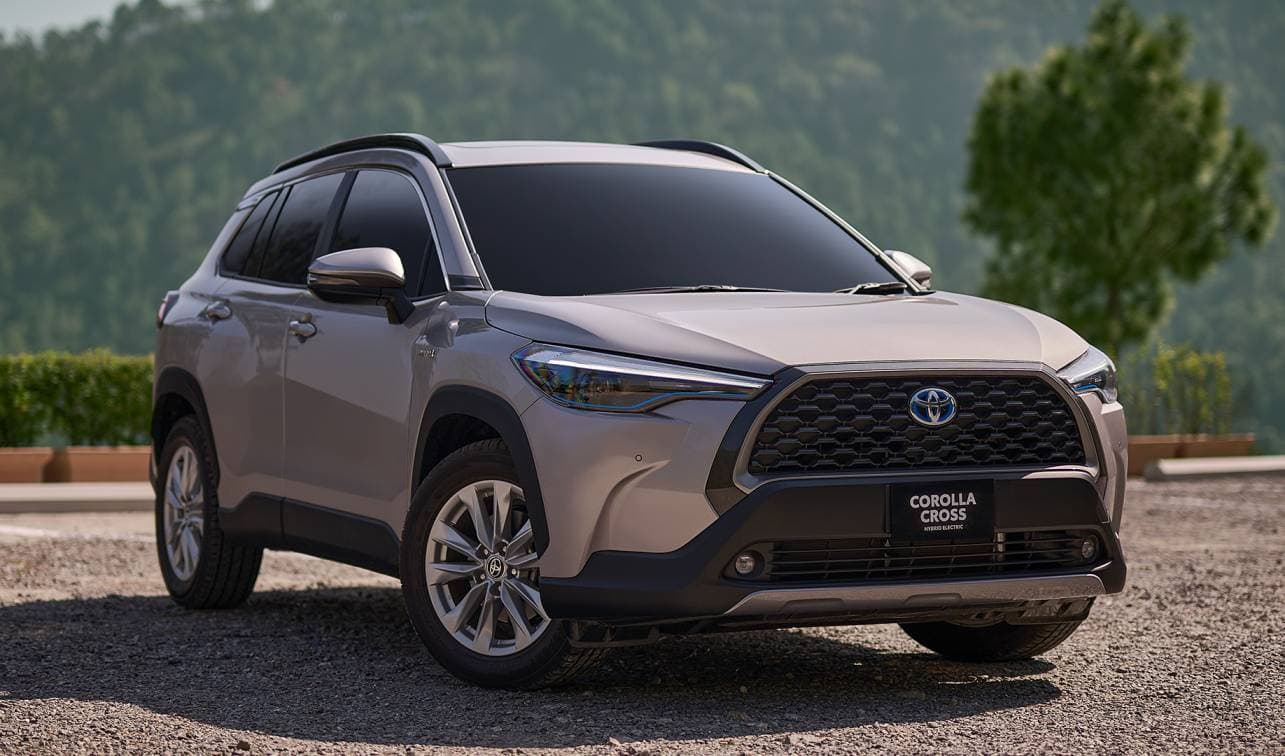
Why it's working: the H6 hits exactly where Pakistani buyers are moving. Mid-size SUV packaging, panoramic screens, ventilated seats, ADAS on higher variants — features that the Toyota Corolla Cross and Honda BR-V simply don't match at the same price. The H6 HEV claims 15–18 km/l in city driving. The PHEV claims 1,000+ km of combined range.
What to watch: the Jolion HEV (priced around the Toyota Corolla) is the next pressure point. If Jolion picks up meaningful volume, Toyota's sedan dominance weakens.
2. BYD — the incoming giant
Local partner: Mega Motor Company (a subsidiary of Hub Power) Models on sale: Atto 3, Seal, Sealion 7, Shark 6 PHEV Status: CBU today; local assembly begins July–August 2026
BYD is the world's largest EV maker. In Pakistan, it's still a small player by volume, but that will change fast. The company's new plant near Karachi — a joint venture with Hub Power's Mega Motor Company — is scheduled to begin local assembly in July or August 2026 with initial capacity of 25,000 vehicles per year on two shifts.
BYD Pakistan has publicly stated it aims to capture 30–35% of Pakistan's EV and PHEV market. Its vice president of sales has forecasted that combined EV/PHEV sales in Pakistan will triple or quadruple in 2025 from a baseline of about 1,000 units in 2024.
BYD's advantage is vertical integration. The company makes its own batteries (the proprietary Blade Battery), motors, and electronics — a cost structure no Pakistani competitor can match. The Shark 6 PHEV pickup, launched in July 2025, signals the breadth of what's coming.
What to watch: the July–August 2026 local-assembly launch. The first Pakistan-assembled BYD model will likely cut 15–25% off current CBU prices. When that happens, the EV conversation in Pakistan flips overnight.
3. MG — the first mover
Local partner: JW SEZ Pvt Ltd (MG JW Automobile Pakistan) Models on sale: HS, HS PHEV, ZS EV, and others Positioning: British badge, Chinese engineering (SAIC Motor), European styling
MG was the first Chinese-owned brand to take EVs seriously in Pakistan. The ZS EV opened the category when there was almost no charging infrastructure. The HS has been a steady seller in the crossover segment. The HS PHEV was one of the first plug-in hybrids available locally.
MG's challenge in 2026 is that Haval caught up on product and BYD is about to leap ahead on price. The brand's "British heritage" positioning still resonates, but the lineup needs freshening. Expect new model launches through 2026.
What to watch: whether MG responds to the Haval H6 HEV with a stronger hybrid offering. And whether JW Automobile can match BYD's expected post-assembly pricing.
4. Changan & Deepal — the dual-brand play
Local partner: Master Changan Motors (Master Motors Ltd) Changan models: Alsvin, Alsvin Black Series, Oshan X7 (5 & 7-seater), Karvaan, M9 Deepal models: S07, L07
Price range: PKR 3.79 million (Alsvin, promotional) to over PKR 14 million (Deepal S07)Master Motors is running the most ambitious dual-brand strategy in Pakistan. Changan covers mass-market — the Alsvin is one of the few credible new-car sedans under PKR 40 lakh, and the Oshan X7 is a serious 7-seater SUV contender. Deepal, Changan's premium EV brand, aims directly at buyers who want a proper EV experience without BYD's badge.
In February 2026, Changan cut prices aggressively — up to PKR 700,000 off the Oshan X7 and PKR 500,000 off the Alsvin Black Series, bundled with two years of prepaid maintenance. That's not a clearance sale. That's a market-share move before BYD's local assembly arrives.
What to watch: Deepal's delivery ramp. If the S07 can establish itself as a credible BYD Sealion 7 alternative, Master Motors locks in two ends of the market — entry and premium — while BYD is still finishing its plant.
5. Also on the radar: Jaecoo, Omoda, DFSK, Foton, GWM Cannon
A second wave is already landing. Jaecoo and Omoda (both part of Chery) have Pakistan representation and are positioning as design-led crossover alternatives to Haval. DFSK covers commercial and small SUVs. Foton is strong in light commercial. And GWM Cannon Alpha — Great Wall's premium pickup — has started appearing on Pakistani roads as a genuine Hilux/Ranger alternative.
None of these are market leaders yet. But two years ago, neither was Haval.
What the Japanese incumbents are actually feeling
Pakistan's Big Three aren't losing yet. They're just winning less.
Suzuki still holds roughly 47% market share. The Alto was #1 for the sixth straight year in 2025 and grew 40% in early 2026. Toyota grew 51.7% in January. Honda grew 63.8%.
Those are strong numbers. But they're happening in a market that grew 37% overall — meaning Suzuki is growing below the market. And they're happening while Chinese brands scale from a smaller base, which means Chinese market share is compounding faster.
The specific pressure points:
Suzuki's weakness is the top end. The Swift and Cultus feel dated against anything Chinese above PKR 40 lakh. Suzuki's entry-level moat is real but narrowing.
Toyota's weakness is the SUV middle. The Corolla Cross is selling, but Toyota has no answer between it and the Fortuner. That's exactly where Haval H6, MG HS, and Oshan X7 live.
Honda's weakness is lineup breadth. Civic, City, BR-V. That's it. No proper mid-size SUV. No hybrid. No PHEV. No EV. When Civic loyalists age into SUV buyers, Honda has nothing to hand them.
The Japanese brands' biggest asset remains after-sales: parts availability, dealer networks, resale value. That moat is slow to erode, but erode it will — especially as Chinese assemblers deepen local parts supply chains through 2027.
What this means if you're buying a car in 2026
Three practical takeaways:
1. The "safe choice" is no longer automatic
For 30 years, buying a Corolla or a Civic was the boring, safe, defensible decision. In 2026, that logic is weakening. A Haval H6 HEV offers better equipment, better fuel economy, and similar build quality at a comparable price point. The only remaining Japanese advantage is resale — and the resale gap is shrinking as Chinese brands stabilise locally.
2. Prefer brands with confirmed local assembly
This is the single most important filter. Brands with local assembly — Haval (Sazgar), Changan and Deepal (Master Motors), MG (JW Automobile), and soon BYD (Mega Motor) — hold their resale value significantly better than CBU-only imports. They also have better parts availability and service coverage. Brands that only sell through grey-market channels should be avoided unless you're buying at a steep discount and plan to keep the car long term.
3. If you're considering an EV or PHEV, wait 4–6 months
BYD's Pakistan-assembled models are expected mid-to-late 2026. Post-assembly pricing will reset the EV market. Changan's Deepal and MG's PHEV lineup will likely respond with counter-pricing. Buying a CBU EV in April 2026 at the current price means watching its value drop noticeably when locally-assembled versions hit showrooms.
4. Check DC fast-charging compatibility (CCS2)
Pakistan's public charging network is standardising on CCS2. Before buying any EV or PHEV, confirm the car uses CCS2. A charger mismatch in 2026–27 is a painful and expensive mistake.
The 2026–2028 forecast
Here's where the market is heading based on what's already in motion:
2026: BYD local assembly begins. Changan/Master Motors doubles down on pricing. Haval H6 remains the SUV to beat. Total passenger car market likely crosses 200,000 units.
2027: Chinese brands combined cross 25% passenger car market share. Honda and Toyota launch hybrids in mid-size SUVs as a defensive response. Suzuki faces serious pressure in the PKR 25–40 lakh band.
2028: At least one Japanese OEM announces a partnership or joint venture with a Chinese EV maker for Pakistani production. EV and PHEV sales combined exceed 20,000 units annually.
Every one of these predictions will be wrong in the details. The direction is not in doubt.
Frequently asked questions
Are Chinese cars reliable in Pakistan?
Reliability depends heavily on the specific brand and model. Locally assembled Chinese cars — Haval H6 (Sazgar), Changan Alsvin (Master Motors), MG HS (JW Automobile) — have now accumulated enough Pakistani road-years to be treated as mainstream. Early concerns about parts availability and service have largely been addressed for brands with local assembly plants. Grey-market imports remain risky and should be avoided.
Is the Haval H6 better than the Toyota Corolla Cross?
On equipment, features, and interior quality, the Haval H6 is ahead at a similar price. On resale value, Toyota still leads. On fuel economy, the H6 HEV beats the Corolla Cross. The right choice depends on how long you plan to keep the car — Toyota wins at 3–4 year ownership horizons; Haval wins if you're keeping it longer.
When will BYD cars be cheaper in Pakistan?
BYD's local assembly plant near Karachi is scheduled to begin production in July or August 2026. Locally assembled BYD models are expected to be priced 15–25% lower than current CBU imports, though actual pricing will depend on tariff treatment and the initial model mix.
Which Chinese brand has the best resale value in Pakistan?
Haval currently leads, partly because Sazgar has been selling H6 in volume for long enough to establish used-market liquidity. MG comes second. BYD, Changan, and Deepal resale data is still limited because of short ownership histories, but brands with confirmed local assembly have a structural advantage over CBU-only brands.
Is it safe to buy an EV in Pakistan right now?
For city-based daily commuting with home or workplace charging, yes. For inter-city highway travel, the public charging network is improving but still patchy. Plug-in hybrids (PHEVs) like the Haval H6 PHEV, MG HS PHEV, and BYD Shark 6 are often the more practical choice in 2026 because they eliminate range anxiety entirely.
Will Suzuki and Toyota go out of business in Pakistan?
No — not in any foreseeable timeframe. Both brands have enormous installed bases, deep dealer networks, and strong resale economics. They will lose market share gradually through 2028 but remain dominant in specific segments: Suzuki at the entry level, Toyota in SUVs and commercial vehicles. The most likely endgame is coexistence, not replacement.
Browse Chinese car listings on CarDeal.pk
Looking at a specific model? CarDeal.pk has active listings across every brand covered here, with AI-powered search that understands queries like "white Haval H6 Lahore under 1 crore" or "BYD Atto 3 Karachi":
Next in this series
This is part 1 of our 12-part Pakistan Auto Makers series. Coming next:
Post 2: BYD in Pakistan — Everything You Need to Know Before the 2026 Assembly Launch
Post 3: MG in Pakistan — From EV Pioneer to Mainstream Contender
Post 4: Haval & Sazgar — Why H6 Is the Surprise #2 Car in Pakistan
Subscribe to CarDeal.pk updates to get new posts as they go live.
Sources: Pakistan Automotive Manufacturers Association (PAMA) monthly reports; Reuters coverage of BYD Pakistan; Sazgar Engineering disclosures; Hub Power financial filings; Ministry of Climate Change EV policy documents; manufacturer pricing as of April 2026. Prices cited are ex-factory and subject to change.
Last updated: April 21, 2026. This article is reviewed quarterly.
CarDeal
Bringing you the latest automotive news and insights from Pakistan